Prohibition history
Canadian whisky and the northern border.
Canada never had a national prohibition of manufacture. Its distilleries produced legally, exported legally, and were not responsible for what happened to a cargo after it cleared Canadian customs. That asymmetry made the northern border the largest single source of good liquor in Prohibition America.
What Canadian law actually said
Canada’s prohibition was provincial, partial and mostly brief. Several provinces banned retail sale during and after the First World War, and most had abandoned it by the mid-1920s in favour of government liquor boards — a system still in place. Crucially, the federal government never banned manufacture, and never banned export.
So a Canadian distillery could make whisky entirely lawfully, sell it to an exporter, and watch the exporter file paperwork declaring the cargo destined for, say, Cuba. Whether the boat actually went to Cuba was a question for somebody else. Export duties were collected either way, which gave Ottawa a direct revenue interest in not asking.
The Detroit River
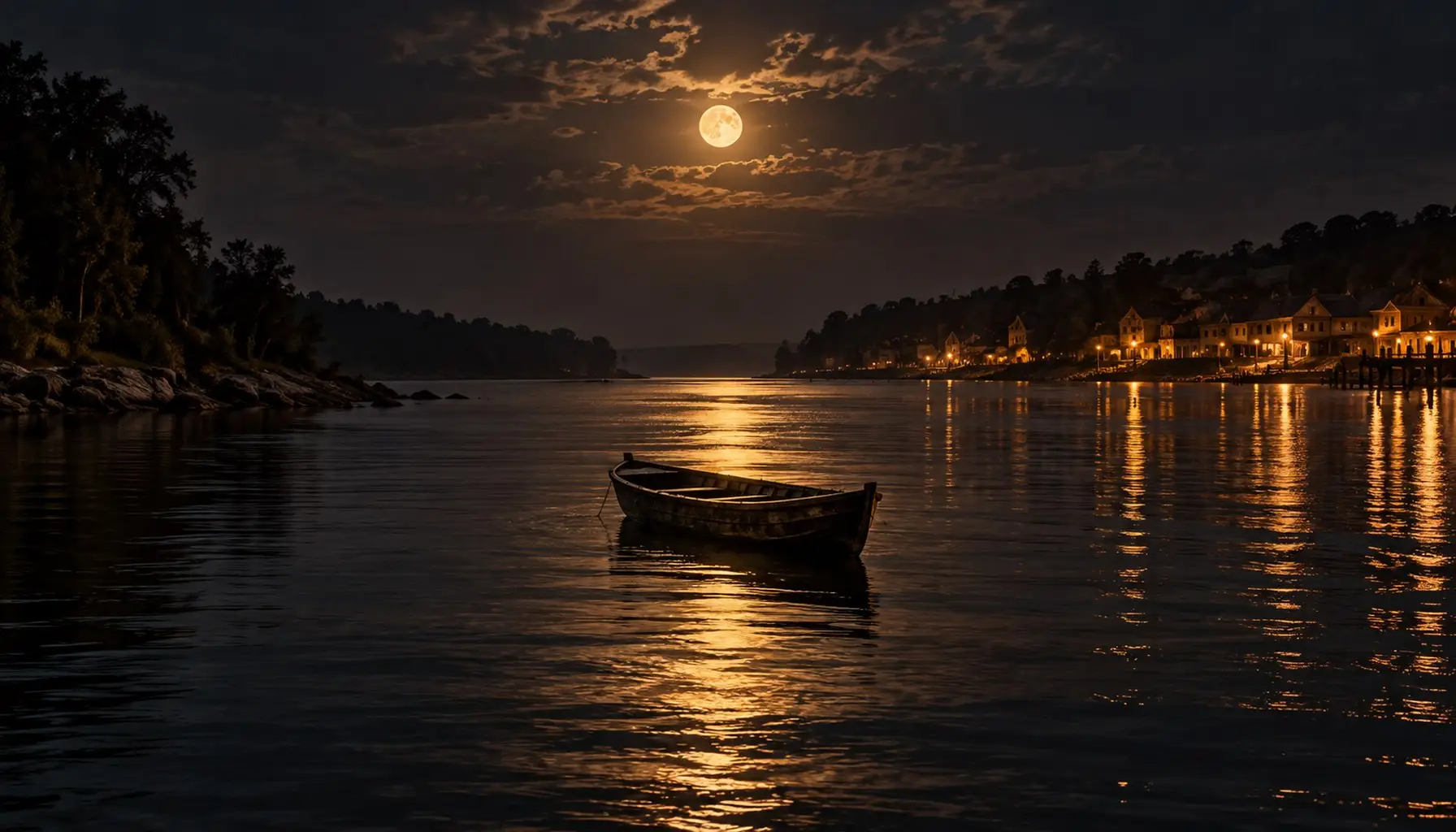
Windsor, Ontario, sits opposite Detroit across water that is under a mile wide in places and freezes solid most winters. It was, by a wide margin, the busiest smuggling corridor on the continent — estimates of the share of all liquor entering the United States that crossed here run to around three-quarters, and while the precision is unknowable the dominance is not disputed.
In summer it was small boats, at night, constantly. In winter it was cars driven across the ice, which sometimes went through; recovery operations in spring were a recognised local activity. On the American side the Detroit trade was run substantially by the Purple Gang, whose reputation for violence was serious enough that Chicago bought from them rather than competing.
Detroit’s illegal bars, in local usage and in the local press, were blind pigs rather than speakeasies.
The companies
Hiram Walker’s distillery sat in Walkerville, on the Windsor side, which is about as well-placed as a business can be. Gooderham and Worts in Toronto, Corby, and the Bronfman family’s operation in the west all expanded substantially across the period.
Sam Bronfman’s companies merged with Joseph E. Seagram and Sons in 1928, and Seagram went on to become one of the largest drinks businesses in the world. The Bronfmans’ Prohibition-era trade was legal under Canadian law throughout, and was the subject of Canadian tax and smuggling investigations afterwards that did not result in convictions. It is a genuinely contested piece of corporate history, and the honest summary is that the exports were lawful and everybody involved knew where they were going.
The rest of the border
It is four thousand miles long and most of it was not policed in any meaningful way. Vermont, upstate New York and northern New England ran steady overland traffic on back roads; the Soo and the Lakes carried boat traffic; the prairie provinces supplied Montana and the Dakotas by truck across country where a patrol could be seen coming for ten miles.
The southern border mattered too, and is usually forgotten. Tijuana, Juárez and the Texas border towns built a tourist trade on being a short walk from a legal drink, and that is the origin of several border towns’ entire twentieth-century economy.
What the border left behind
Windsor and Detroit both have a substantial amount of it: buildings, tunnels that genuinely were used, a well-documented local history and museums that take it seriously. The Canadian side is noticeably more relaxed about discussing it, because on that side almost none of it was a crime.
It also left Canadian whisky’s position in the American market. Rye-style Canadian whisky became a standard American drink during the only period when it was reliably available and American whiskey was not, and the brand loyalties formed in those years outlasted repeal by generations.
The one thing to be careful of
Tunnel claims. Detroit and Windsor both have genuine documented examples, which means every old building in both cities now has a story. The same is true in Vermont border towns and along the New York line.
The test is the same everywhere: is there a source that is not the current owner? A city survey, a newspaper report, a nomination document, a photograph. Where there is, we say so. Where there is not, we say that instead.
Where the border states stand now
The border states are still the border states. We list 197 hidden bars across the seven that face Canada.
These are not the historic rooms — almost none of them is — and we say so on every listing. They are what the history turned into, which is its own thing worth knowing.
- Sincerely, Ophelia New York, NY
- Volstead's Emporium Minneapolis, MN
- Bathtub Gin New York, NY
- Needle & Thread Seattle, WA
- Bathtub Gin Seattle, WA
- Fig. 19 New York, NY
- The Garret New York, NY
- 118 Proof - Speakeasy Portland, MI