Prohibition history
How raids worked.
The weapon that frightened speakeasy proprietors was not the arrest, it was the padlock injunction: prove a premises had been used to sell liquor and a judge could close it for a year, with no criminal conviction and no help for the landlord. It shaped how every illegal bar in America was built.
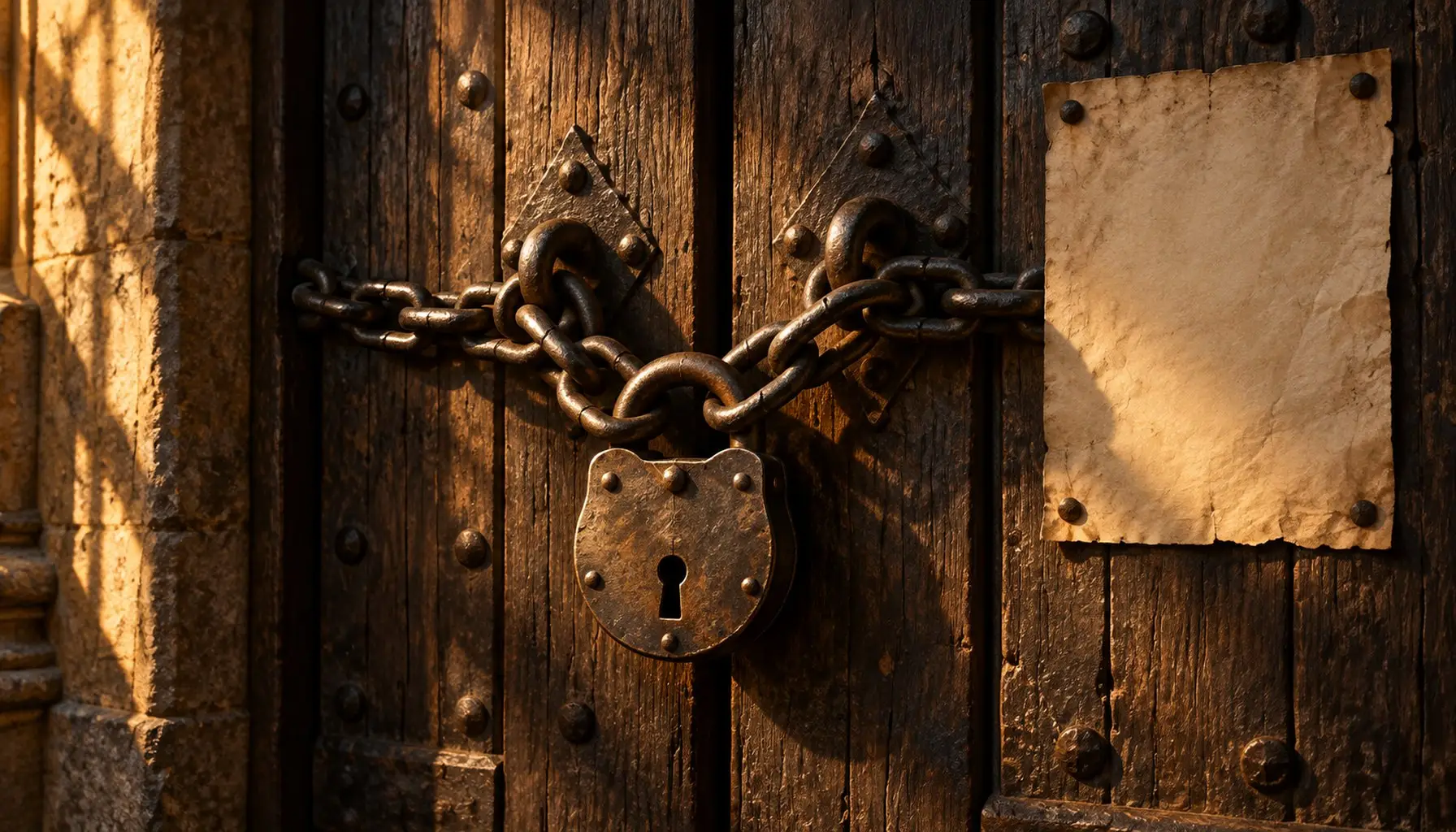
The padlock
Section 22 of the Volstead Act let a federal attorney declare a place a common nuisance and seek an injunction in equity. The standard of proof was the civil one, there was no jury, and the remedy was closure of the premises for up to a year together with the sale of the fixtures.
Tens of thousands of places were padlocked over the decade. For an owner it was ruinous in a way a fine was not: the lease still ran, the fittings were gone, and the landlord — who might have known nothing — had a dead property for twelve months and every reason never to rent to that trade again.
That one provision explains most of speakeasy design. Rent, do not buy. Fit cheaply. Put the stock where it can be dumped. Know the next address.
How places were found
Informers, overwhelmingly. The Act allowed rewards, the Bureau had nothing like the manpower to patrol, and the great majority of raids began with a tip from a neighbour, a competitor, a dismissed employee or a customer with a grievance.
Undercover buying came next — an agent needed to purchase a drink to establish the sale, which is why Izzy Einstein’s concealed funnel and flask mattered so much: a sample preserved at the moment of purchase is evidence a defence lawyer cannot easily argue away.
Actual detective work was rare. So was surprise. A great many raids were known about in advance, because a great many police forces were paid to make sure they were.
What a raid looked like
Agents at the door, often with local police, sometimes with a warrant and sometimes on the strength of a purchase just made. Patrons were usually not arrested — drinking was not a crime and processing a hundred customers served no purpose — so the night ended with names taken and people sent home.
The proprietor, the bartender and anyone handling stock were charged. Liquor was seized and destroyed, often publicly, because the photographs were the point: barrels axed on a quayside, bottles poured into a gutter, a mayor swinging a hammer. Those pictures were produced for the newspapers as evidence that something was being done.
Then the premises were padlocked, and three weeks later a similar room opened two streets away.
Olmstead, and the wiretap
Roy Olmstead was a Seattle police lieutenant who left the force to run the largest bootlegging operation in the Pacific Northwest, with a reputation for not carrying weapons and not cutting his liquor. Federal agents tapped his telephone lines from the street outside his property and built the case on the transcripts.
In Olmstead v. United States (1928) the Supreme Court held that wiretapping without entering the premises was not a search under the Fourth Amendment, because nothing tangible had been seized. Justice Brandeis dissented, arguing for a right “to be let alone” that the Constitution protected regardless of the technology.
Brandeis lost, and his dissent became the majority position forty years later in Katz. American privacy law as it now stands grew out of a Prohibition bootlegging case.
Enforcement that was not even attempted
In much of the country, very little happened. New York repealed its own state enforcement act in 1923, which meant the federal Bureau was on its own in the largest city in the nation. Maryland never passed one at all. Kansas City under the Pendergast machine ran openly. Several states quietly stopped funding enforcement by the late 1920s.
Because the 18th Amendment gave states concurrent power rather than obliging them to use it, a state that preferred not to could simply decline, and plenty did. The map of how Prohibition was actually experienced is a map of local political will far more than of federal effort.
What survived in the architecture
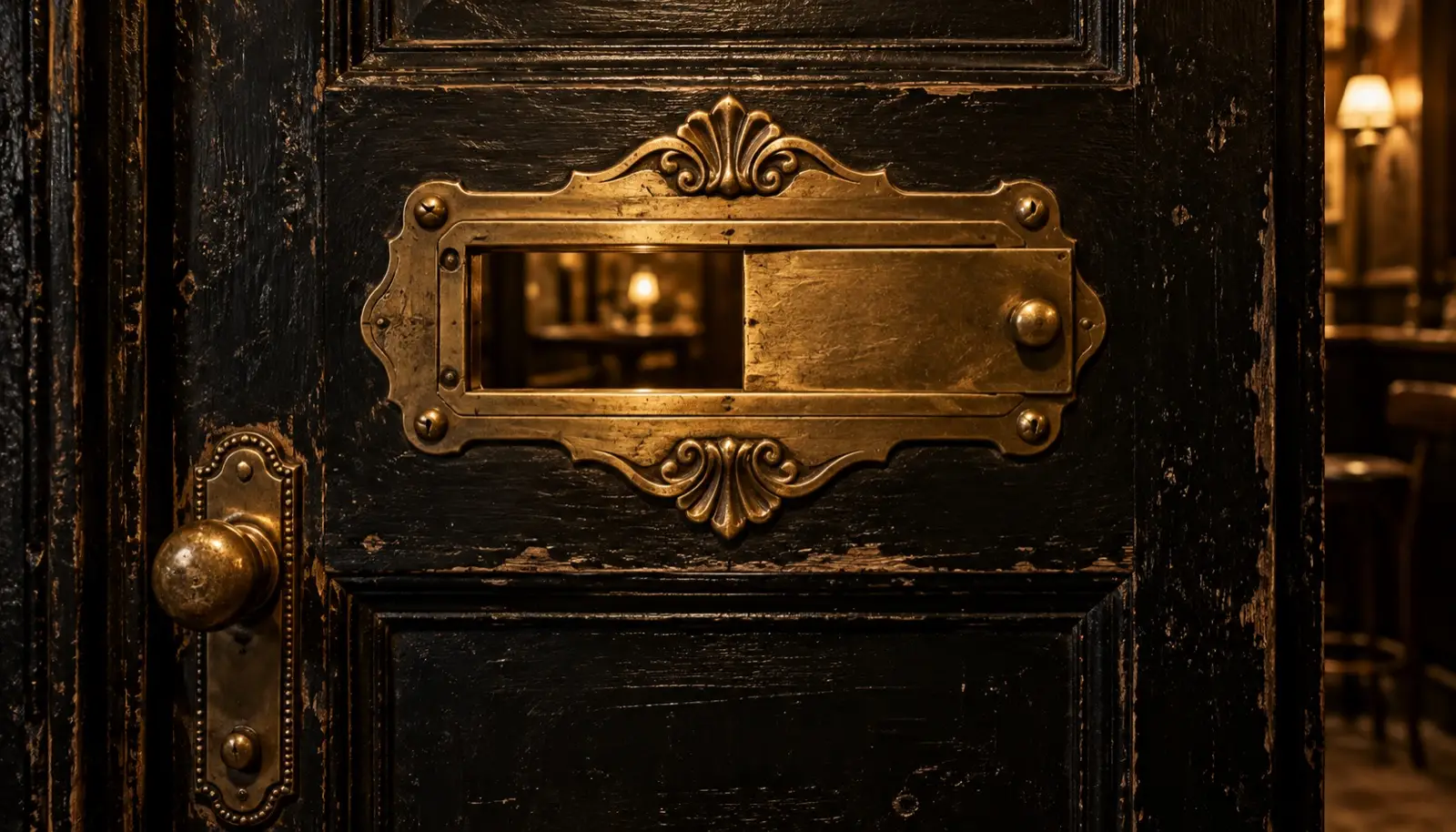
Peepholes, service doors, two-stage entrances, back stairs, and a general habit of not putting the bar where it can be seen from the street. Some of it is still physically present in older buildings and occasionally still in use.
Most of what you will be shown, though, is later work. A sliding grille installed in 2018 is a nice piece of design and not an artefact, and we try to keep the two apart on a venue’s page rather than letting the fitting imply a history.