Prohibition history
Near beer, and the breweries that survived.
Breweries could legally make “cereal beverage” below half a per cent alcohol, and most of them tried. It sold badly. The companies that survived the fourteen years did so on malt syrup, ice cream, ceramics, yeast and soft drinks — and the ones that did not survive were most of them.
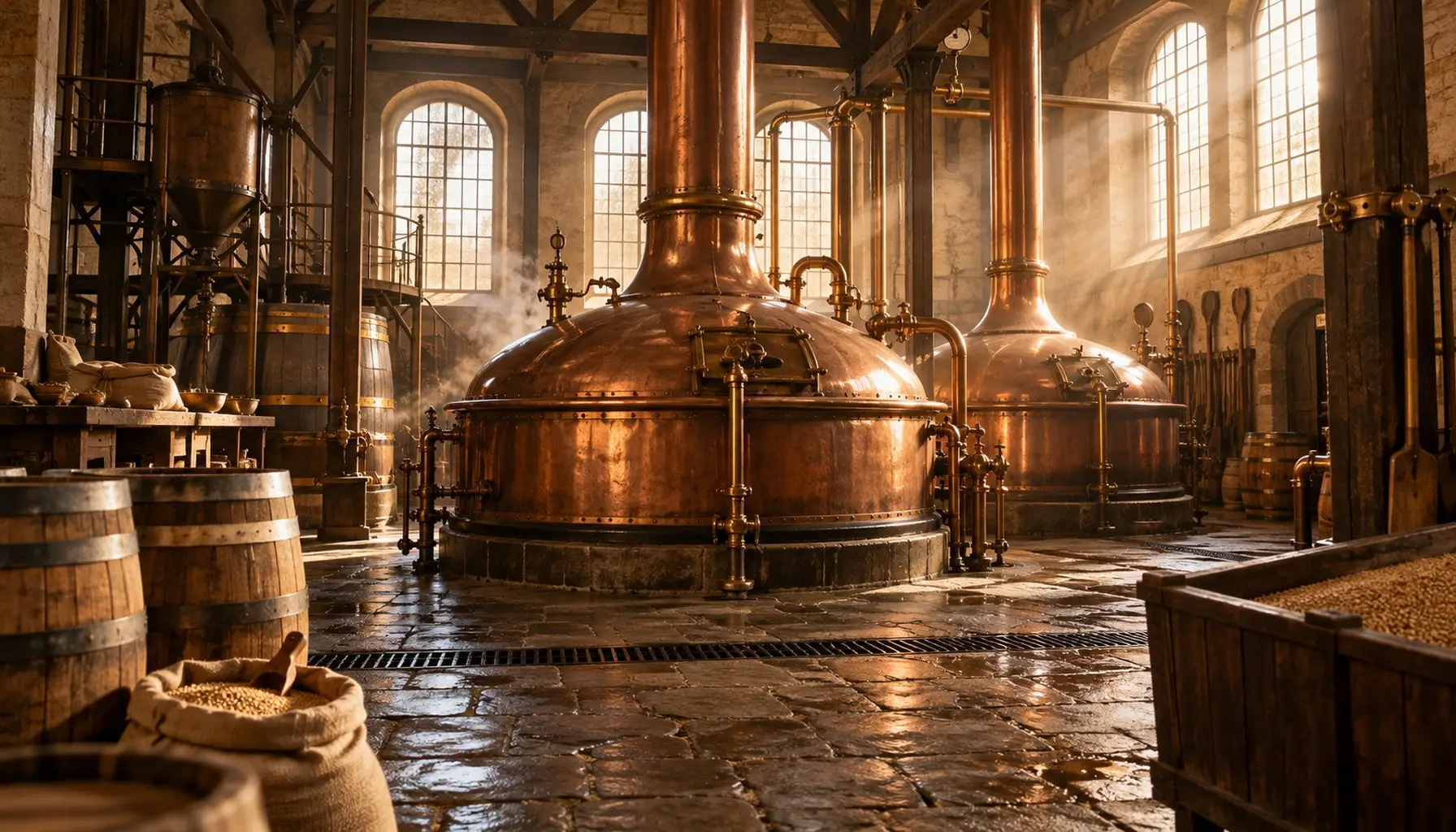
How near beer was made
Brew real beer, then take the alcohol out — by heating it off, or later by vacuum distillation that did less damage to the flavour. What was left had to test below 0.5 per cent, and the process was expensive, the product fragile and the result, by universal contemporary agreement, disappointing.
The legal name was cereal beverage. Brewers sold it under brand names — Bevo from Anheuser-Busch, Vivo, Famo, Pablo, Bravo — and the public bought it enthusiastically for about two years and then largely stopped. Anheuser-Busch had built an enormous plant for Bevo and watched sales collapse by the mid-1920s.
Needle beer, which is where most of it went
Alcohol injected back into the barrel or the bottle, often with a syringe. Near beer was the ideal base: it looked right, tasted roughly right, and could be bought legally by the truckload with no questions asked.
Plenty of brewers knew perfectly well where their output was going, and some were prosecuted for arranging it. The ones who did not participate still supplied the raw material for people who did, which is a distinction that mattered legally and not much otherwise.
Malt syrup, sold with a wink
The most profitable legal product a brewery could make. Malt extract has real uses in baking and confectionery, and it is also precisely what you need to make beer at home, which the label did not need to say.
Sales were enormous, far beyond anything baking could absorb, and the packaging frequently carried instructions on what must on no account be done with the product lest it ferment. Pabst and others ran the trade openly. It is the same joke as the California grape brick, told in a different medium.
The other things they made
| Ice cream | Refrigeration and distribution already in place. Yuengling and others went straight into it. |
|---|---|
| Ceramics and malted milk | Coors moved into porcelain and chemical products; the ceramics business outlasted Prohibition by decades. |
| Yeast and baker’s supplies | Anheuser-Busch built a yeast business substantial enough to matter on its own. |
| Soft drinks and dairy | The common fallback: same bottling line, same trucks, same accounts. |
| Truck bodies and refrigeration | Several brewers were sizeable engineering operations and simply sold that capability instead. |
How many did not come back
Most. The United States had well over a thousand breweries before Prohibition, the great majority of them local, and only a few hundred reopened after repeal. Fourteen years is longer than a small business can hold plant, staff and licences for nothing.
The survivors were disproportionately the large ones, which had capital and other products, and the effect compounded: consolidation continued through the 1930s, the war and the decades after it, until a handful of national brewers made almost everything Americans drank. The craft brewing revival of the 1980s onward is, among other things, a four-decade rebuild of something Prohibition demolished in a year.
New Beer’s Eve
The Cullen–Harrison Act redefined “intoxicating” upward to 3.2 per cent by weight, and real beer became legal at one minute past midnight on 7 April 1933 — eight months before Prohibition itself ended. Crowds queued outside breweries overnight. Trucks ran through the night to deliver.
Brewing towns still mark 6 April as New Beer’s Eve, and of all the Prohibition anniversaries it is the one with the most genuine local tradition behind it, because the people who queued told their grandchildren about it.
Where it survives in the directory
Breweries that survived on near beer kept their dates. 7 bars in this directory put a year from the era in the name — almost never the year they opened.
They are spread across 6 states, concentrated in California (2), New Jersey (1), Arkansas (1), Nevada (1).
These are not the historic rooms — almost none of them is — and we say so on every listing. They are what the history turned into, which is its own thing worth knowing.
- 1933 Room Somerville, NJ
- 1922 El Paso, TX
- 1923 Banana Club Texarkana, AR
- 1923 Bourbon & Burlesque by Holly Madison Las Vegas, NV
- 1933 Grill North Belle Vernon, PA
- Club 1923 San Francisco, CA
- 1901 Speakeasy Oxnard, CA