Prohibition history
What was a speakeasy?
A speakeasy was a place that sold alcohol illegally during American Prohibition, between 1920 and 1933. The name is older than Prohibition and means what it sounds like: keep your voice down. They ranged from a back room with a plank on two barrels to supper clubs with orchestras and a doorman who knew your face.
Where the word comes from
“Speak easy” as an instruction is nineteenth-century and British before it is American — smugglers’ slang for keeping your voice down near a house that sold untaxed liquor. The American version is usually traced to the Pennsylvania saloon trade of the 1880s, when a state licence became expensive enough that plenty of small operators simply stopped buying one.
The story most often attributed is that of Kate Hester, who ran an unlicensed bar in McKeesport, Pennsylvania, and told customers getting loud to “speak easy”. It is a good story and it is repeated everywhere, including by people who should be careful about it. Treat it as reported rather than documented: the phrase appears in print in the 1880s in roughly that sense, which is the part that can be checked.
The word only became national vocabulary after 1920, when the thing it described became national. Americans had plenty of other names for it too — blind pig, blind tiger, gin mill, whisper joint, hush house — and which one you used depended largely on where you lived.
What they were actually like
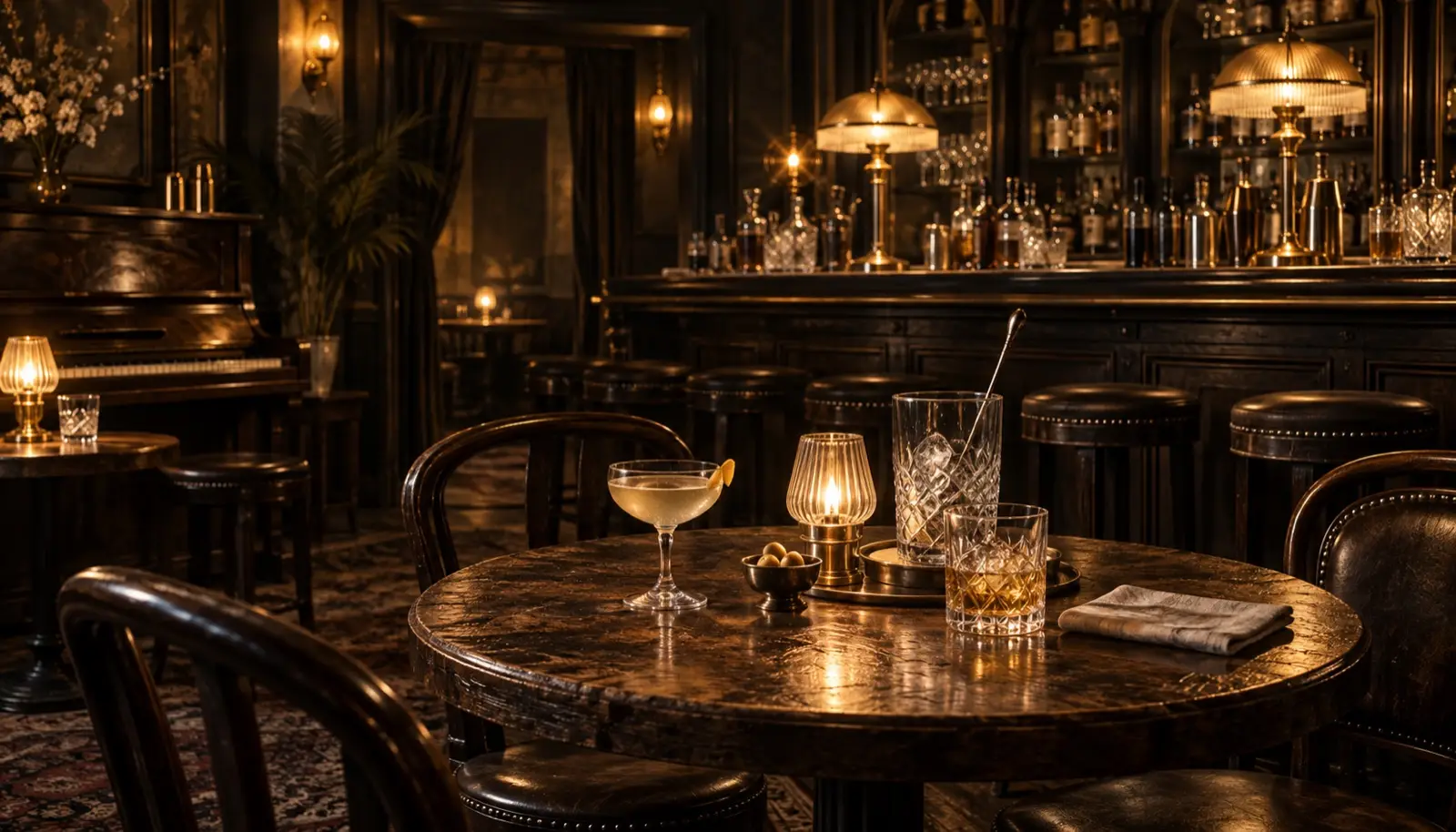
The cinematic speakeasy — a brass peephole, a password, a jazz band, a beaded dress — existed. It was also a small minority of them, concentrated in a handful of big cities and aimed at people with money.
The ordinary speakeasy was a room. A back room of a cigar store, a basement under a laundry, a kitchen with a curtain over the door, the upstairs of a restaurant that was perfectly legitimate on the ground floor. The drink was bad, the mark-up was enormous, and the furniture was chosen on the assumption that it might have to be abandoned. Nobody built a mahogany back-bar for a room a federal padlock could close for a year.
Two things were nearly universal. The first was a door policy, formal or not, because the proprietor’s liberty depended on who came through it. The second was an exit plan: a chute, a false wall, a shelf hinged to tip its bottles into the drains, a back staircase into an alley. The famous version at the 21 Club in New York was an engineering project. The usual version was a hole in the floor.
How you got in
Passwords are real, and they are also over-represented in the retelling because they are the most repeatable detail. In practice entry was mostly about recognition. A regular was known by sight; a stranger arrived with a regular, or with a card, or with a name to drop. Membership cards were common in the better rooms, partly as theatre and partly because a club with members had a slightly better legal argument.
What this meant in practice is that a speakeasy was a social network before it was a bar. You could not walk into one on the strength of having heard about it, which is exactly the thing the modern versions have to fake.
Who went
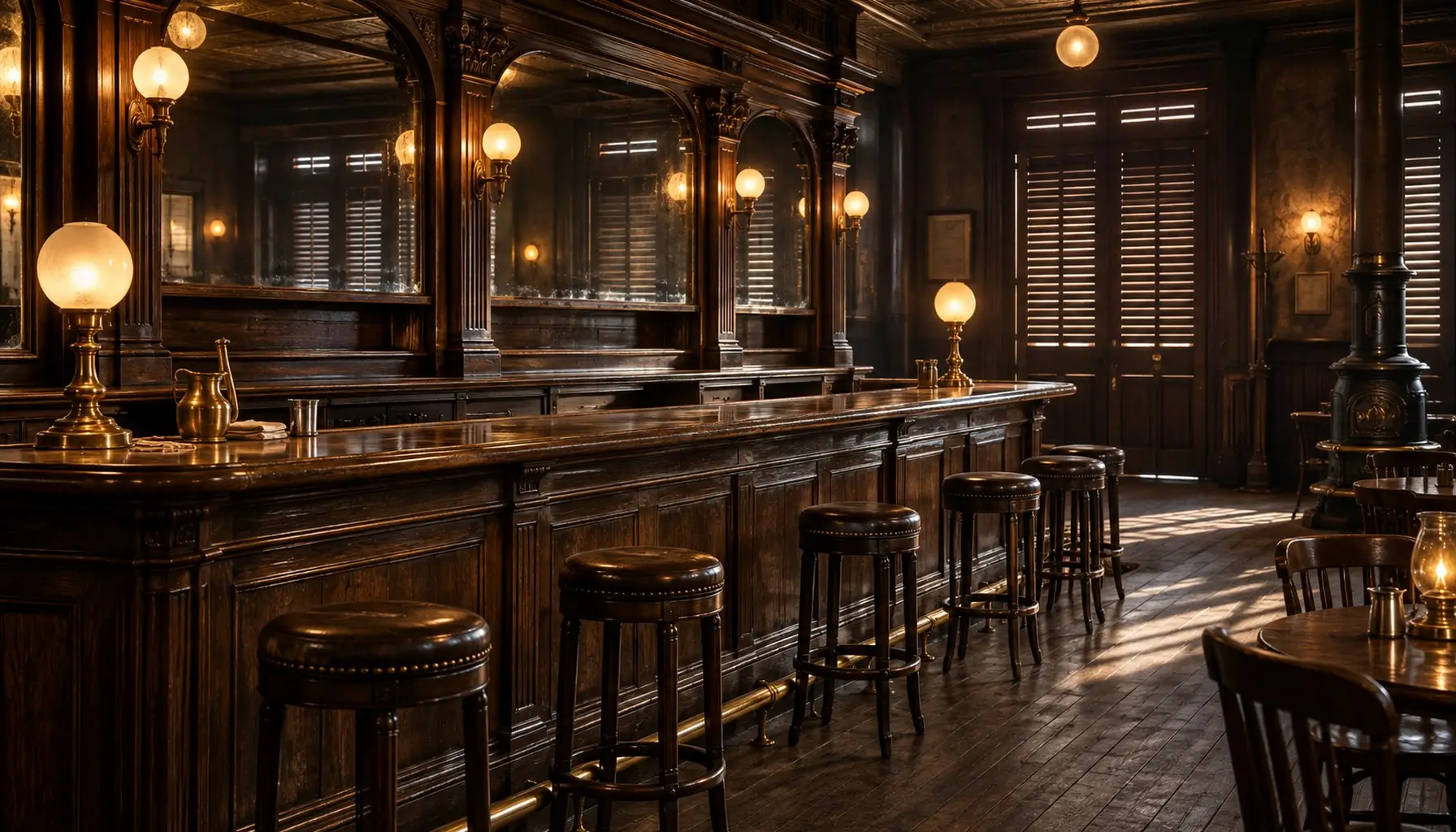
The saloon the drys destroyed had been, overwhelmingly, a male institution; many would not serve women at all. The speakeasy that replaced it had no such tradition to defend and every commercial reason to double its market. Within a few years mixed-sex drinking in public was ordinary in a way it had not been before 1920, which is one of the few genuinely large social changes Prohibition can be credited with — and emphatically not one the Anti-Saloon League intended.
The cocktail went the same way. Sweeteners, citrus and vermouth did useful work on bad spirits, and a generation of drinkers learned to drink mixed because the alternative was undrinkable neat.
What was in the glass
Mostly not what the label said. The spirits trade of the 1920s ran on redistilled industrial alcohol, raw neutral spirit cut with water and flavouring, and whisky smuggled from Canada or the Caribbean that was then stretched two or three times before it reached a glass. “Cutting” was the whole business model, and the cheaper the room, the more aggressive it was.
Gin was the easy one, because gin does not need age. Neutral spirit, water, glycerine for body and juniper oil for flavour produced something that was gin in the sense that it was clear and tasted of juniper. It was made in whatever vessel was to hand — the bathtub of the name is usually a misreading, since the bath was where you topped the bottle up with water rather than where you made it — and it was fine in a sour and awful on its own.
This is the direct ancestry of the cocktail list in every modern speakeasy-styled bar. Citrus, sugar, bitters and vermouth were in a glass in 1925 because they were doing a job. They stayed because the drinks turned out to be good.
How it ended, and what happened to the rooms
Most speakeasies did not become bars. When liquor was legalised in 1933 it came back licensed, taxed, inspected and — in most states — subject to a brand-new control board with opinions about who could hold a licence and what the premises had to look like. A basement with one exit and a tipping shelf did not qualify, and a proprietor with a padlock record often did not either.
The ones that did survive the transition were the legitimate businesses that had been running a sideline: the restaurants, the hotels, the clubs. That is why so many of the genuinely continuous Prohibition-era survivors are restaurants with a bar rather than bars, and why claims of continuous operation are worth checking rather than repeating.
And what a speakeasy is now
Nothing on this site is illegal. The bars we list are licensed, taxed and inspected, and when they put a door in front of the room it is a design decision rather than a legal necessity. That is worth saying plainly, because the word has drifted a long way from what it meant.
What the modern version borrows is the architecture of discretion: an unmarked entrance, a small room, a deliberate gap between the street and the bar. Done well it produces a genuinely different evening — quieter, slower, more attentive. Done badly it is a velvet rope with a backstory. We list both, describe the door honestly, and leave the judgement to you.
We also do not publish passwords. If a bar runs on one, that is the bar’s to give.